
What people have said about the poetry at the launch…
“A wonderful collection of poems, some very moving...”
“Hearts swell, eyes prickle and goosebumps emerge... with the amazing words.”
“A perfect presentation of profound, pithy, pleasing and thought provoking poetry.”
“You made me laugh, you made me cry, and I loved every minute!”
And a REVIEW of the whole collection…
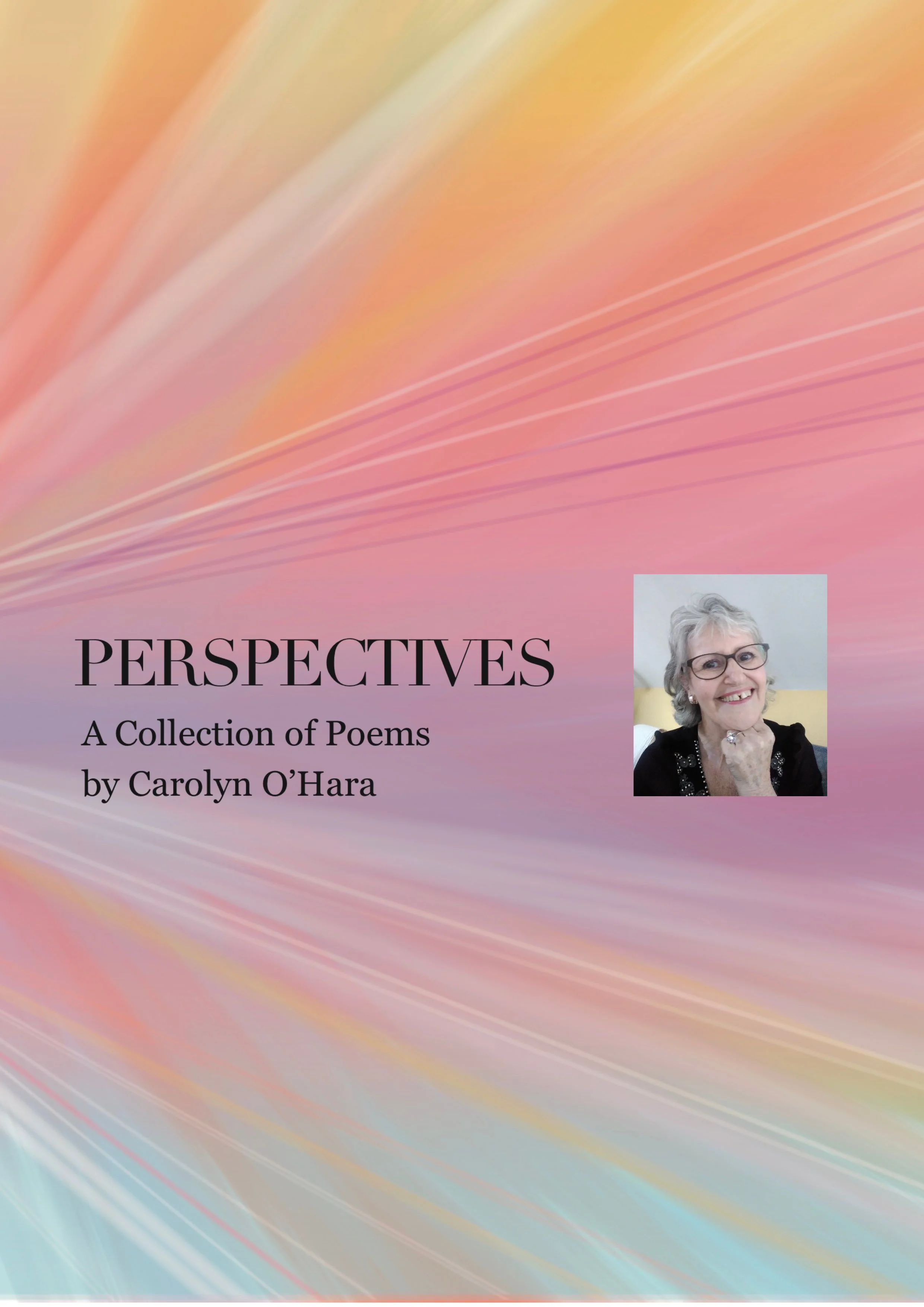
“Carolyn O’Hara’s poems are works of accurate witness, discreetly observational, delivering deep insights through scrupulous annotation of surfaces, balancing angles of approach with emotional appetite and that rare quality, an enacted respect for others. A squirrel ‘reconnoitres’ and dashes through a ‘tawny hued tunnel’ under a canopy of ‘larch lace’ leaving ‘branch reflections’ to scribble ‘watery snakes in endless oscillation’. Language placed so astutely delivers the keen pleasure of sharp recognition, a vinegar tang of sharp-eyed seeing, and then a honeyed sense of perception turning into warmth, a shared sympathy. The poems depict objects in nature, a person in movement, whether by car (past obstacles, diversions, frustrations, until the open road breathes freedom) or by subway (claustrophobic, surrounded by a mass of human bodies, breathing) or simply walking, inside the domestic home or outside in the town or village street. This sense of movement gives every poem a recurring and various kind of liveliness, an engagement with whatever the poet meets on her way, her own experience of the unfinished business of human participation. And more than human: there’s a fountain in a park, there’s a dog, but humanity is the gauge. A grandson is held close through COVID lockdown. There are visits to the dentist, to the liquor store. There’s an elderly lady who needs help to carry things home, and there’s the gift of a window blind presented to a refugee discovering a new home, and thinking of the pleasure this will bring to his daughter. These poems, ever so gently, with intelligent restraint and clever patience, and with a razorblade edge and concision, invite us to think how such things feel, what the visible shows us, in and beyond its surface movements. They are bagatelles of sensual sight, trellis-works of sympathy.”